I’ve had a good reading year this year, getting through an amazing 45 books so far. That’s not far off one a week! Like a lot of people I have struggled with reading in past years, but as one of first the books I read this year advised (Stolen Focus), you can’t sit quietly and read during a global pandemic, your body is too highly pumped with stress chemicals.
Because of the number of books I’ve read this year, I’m splitting my favourites into Non-Fiction and Fiction categories.
Non-Fiction

Humankind – Bregman Rutger This is one of the first books I read this year, and it was a good and positive one to start on. Despite what you see on the news, and despite what you might believe from social media, people are essentially good and kind. The author cites a number of instances from history and pre-history that explain how humans only got to where we are today by cooperating. He also takes a number of famous instances used to further the argument that humans are an unkind species (the student jail experiment, the murder of Kitty Genovese) and proves how the facts around these were twisted or outright fabricated. Reassuring, accessible and interesting, this book helps you believe there is some hope for humankind after all.
Around India in 80 Trains – Monisha Rajesh Back in the BC (Before Covid) Husband and I took a trip in India that involved a number of overnight trains, which probably predisposed me to be interested in this book. I’ve read a few non fiction travel books this year, but particularly enjoyed this one because I had some knowledge of the subject matter. Reading this book, I could almost hear the clack-clack of the train on the tracks, feel the rocking of the carriage and enjoy the conversations with strangers that spring up in the enforced intimacy of the sleeper carriages.

This is going to hurt – Adam Kay This book is so funny, it’s outrageous that the stories are true. Adam Kay worked hard at school so he could qualify to study medicine. Then he studied hard to do well in his degree, then he worked hard for the NHS as a junior doctor before working hard as a consultant before quitting the NHS to work as a comedy writer. The stories in this book are from diaries he kept while working as a doctor (although where he found the time I don’t know). The book is funny, occasionally gross, and often mind blowing in revealing how tired the people you rely on to save your life actually are. Falling asleep in the car park, or at traffic lights; doctors coming in to work a half shift on their wedding day because there was no cover. These are wonderful, devoted people but they are being ground down by underinvestment and overwork. Let me repeat, these are the people you rely on to save your life. Recommended reading for anyone relying on the UK’s National Health Service for medical care.

Prisoners of Geography: Ten Maps That Tell You Everything You Need to Know About Global Politics -Tim Marshall. This book reveals the important role that mountain ranges, plains and navigable rivers can play in whether a country or region can develop easily or not. A little slow to get going, but intriguing in looking at how the physical forces of geography have shaped the world’s political power. Mountain ranges can prevent conflicts in the same way their absence can cause repeated invasions. Having a large country doesn’t guarantee wealth if you have no infrastructure or resources. Colonial powers can be blamed for causing – albeit indirectly – several major ongoing conflicts of the past 50 years. An interesting look at world power and history from a physical geography perspective.
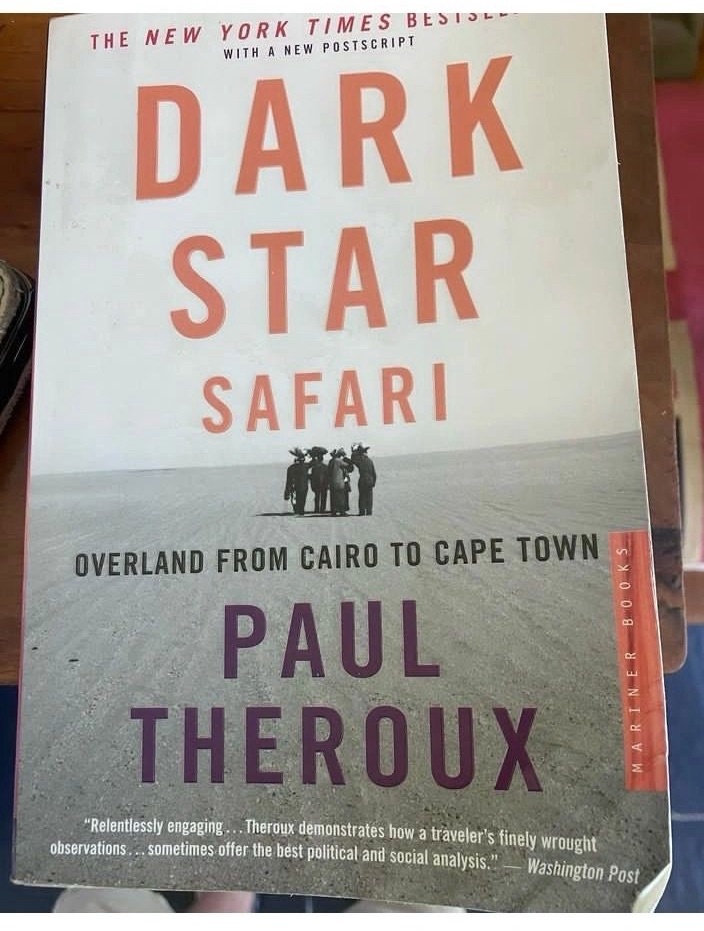
Dark Star Safari: overland from Cairo to Cape Town – Paul Theroux
I’ve read Paul Theroux travel books before, and have often felt he was a bit of a wanker. In this book though, he seems to acknowledge that he is a bit of a wanker, to take himself somewhat lightly. This book is a journey in the mind as much as a physical journey across the continent. Theroux is approaching a significant birthday, and this journey gives him time to reflect on his youth spent in Malawi, and how the idealised dreams of his youth compare with the realities of modern Africa. Unfavourably is the general answer, because you can’t step into the same river twice. At the same time he describes the issues he sees, his concerns for the future, and the harsh realities of life for many, even if some issues are of their own making. He travels by train, truck, taxi and even dugout canoe, experiences hospitality and hostility, all of it described in enough detail for you to feel desert sand under your collar, campfire smoke in your eyes, or the hum of a mosquito near your ear.
Fiction
The King of Warsaw – Szczepan Twardoch I would not have picked this book up if it hadn’t been shortlisted by my work literature-in-translation competition a few years back. After all, the story about a Jewish gangster boxer living in the Warsaw ghetto in the 1930s can’t be a happy one, can it?
But it was an interesting one. Quite early in I was hooked, dropped into this other world I knew nothing about. The switches between the past, with its casual violence and cheapness of human life; and the present, where a forgetful old man tries to write his memoirs; reveal the truth of the story slowly. For me, this book was surprisingly enjoyable, as the story unfolds against the oncoming rise of nationalism and fascism in Warsaw. You know you are witnessing the end of something, it’s a question of who or what will make it through. (I believe the book has been made into a mini series for anyone who prefers that to reading.)
Lessons in Chemistry – Bonnie Garmus This book came out last year, but I only got hold of a copy this year. This book is set in the 1950s, a time when casual sexism was the norm, women weren’t regarded seriously in the workplace and women who experienced sexual harassment (and assault) were probably asking for it. Against that background, Elizabeth Zott is trying to build her career in chemistry. Refusing to conform, and failing to understand why she should conform, Elizabeth is a spiky character who you sometimes want to shake and say “Oh for heavens sake why do you make things so hard for yourself?” But at the same time you are pleased that she holds fast to her principles. Even as it costs her dearly time after time.
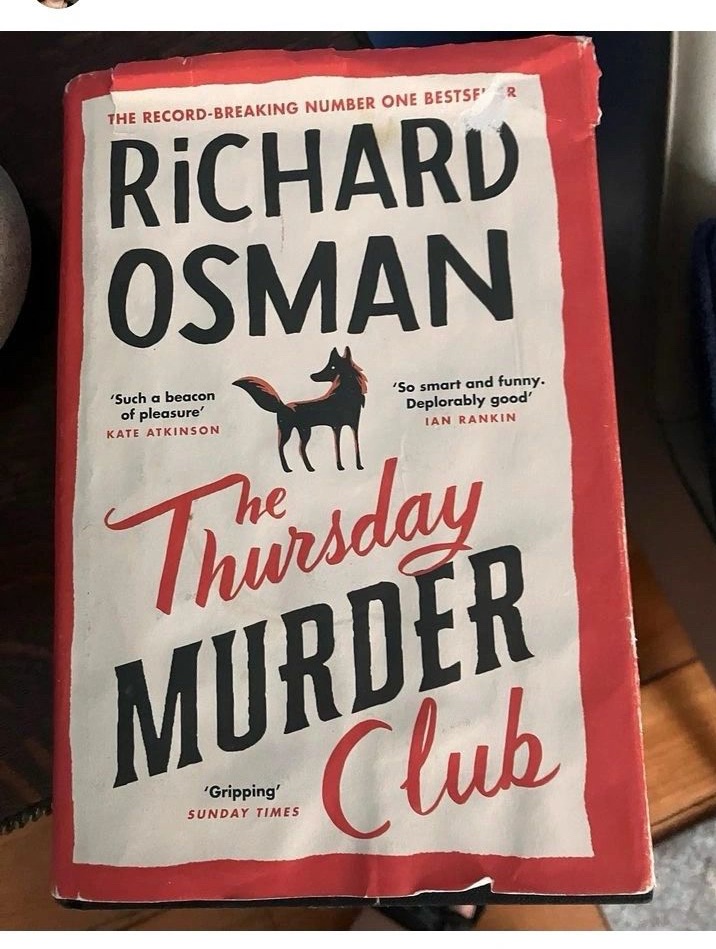
The Thursday Murder Club – Richard Osman The first in a charming series about a group of septuagenarians who solve murders from their retirement village, and through their investigations, get embroiled in some contemporary murders as well. The characters are all nicely crafted and there’s a vein of Very British Humour running through. Charming, funny, and just a little bit dark, this book makes you believe in the possibility of an engaged and productive senior life. I’ve read three in the series and see a fourth is now available. I like the characters more the longer I spend with them.

The Invisible Woman – Slavenka Drakulic In complete contrast to The Thursday Murder Club, this book, a collection of short stories, paints a bleak picture of elder life. From the physical breakdown of the body and the mind, to the invisibility of the elderly as they go about their lives, to the final story, a detailed description of packing for a trip and the many considerations needed to even go away for a few days. It would be grim reading if it weren’t written so beautifully, almost poetically, and the characters in these stories are rendered with such sympathy that you feel their pain, their confusion, their frustration.
(I also always recommend her book How We Survived Communism and Even Laughed)
Station Eleven – Emily St. John Mandel An actor collapses and dies on stage as a virus sweeps across the world. Some people survive, most die, and they die quickly and in the millions. This novel circles around the dead actor, the people in his life, and their lives before and after the virus. What do you keep in a world where so much has been lost? How do you live your life in a world where the old rules have been thrown away? Disturbing and unsettling in parts, but always engrossing.
I’m always interested to hear what books you read this year that you’d recommend.
And also, what books disappointed you? And why?
Happy reading in 2024, friends!

 Tales from Tobhamhor
The Bergman book seems quite interesting. I’ve known that the Kitty Genovese case was inaccurately reported, but I didn’t know that similar things have been said about the Stanford Prison Experiment. I remember reading Zimbardo’s own book, The Lucifer Effect, on that experiment and Abu Ghraib. That was a good book too!
LikeLiked by 1 person