

Some years ago I was learning Portuguese in anticipation of a holiday to Madeira. I was using an app based system where you repeat and write phrases. Husband had been in the room with me most of the time while I was repeating sentences like Their elephant orders a beer or The sauce has no carrot. I was working through vegetables and I came up on the word berinjela.
“Eggplant,” says Husband, without any prompting from me. “Like a Brinjal Bhaji.”
I love looking at language and seeing how words move across continents and into other languages. So finding the same word for eggplant (aubergine) appearing in Portguese and on Indian restaurant menus is intriguing. Let’s look at that more closely.

Both the plant and the word may come into Europe from North African and from Arabic (al badhenjan). The Moorish influence would have brought the eggplant into southern Europe through Spain and Portugal with a different pronounciation – brungiel in Maltese, berenjena in Spanish and as noted above, berinjela in Portuguese and aubergine in French.
I think the Ottoman empire may have been responsible for the introduction of the aubergine/eggplant into Southern and Eastern Europe. Starting from the Turkish – patlican (the “c” should be wearing some kind of addition which indicates it’s pronounced like a “j”) you find Bulgarian is tatladjan; Hungarian is padlizsan; Croatian also patlidzan. Heading north your find it in Estonian (baklazaan); Ukrainian (baklazhaniv); and Russian (balkazhani).
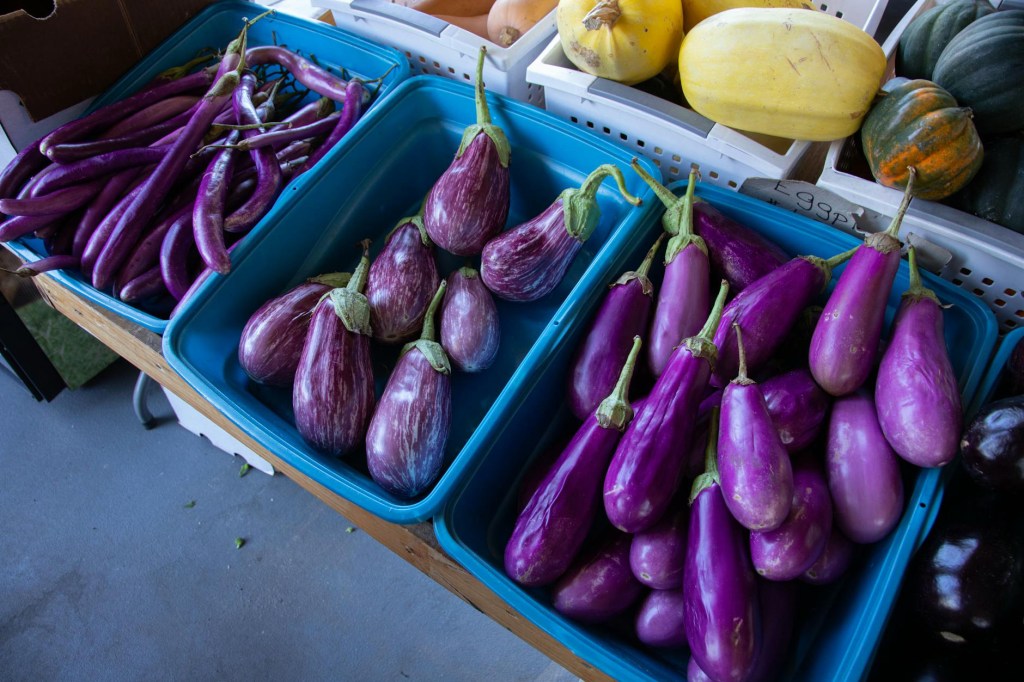
One word that stands out in its non-similarity is melanzana in Italian. The picanos website indicates this different name came from the Italian mala insana – mad apple – and a belief that the fruit “made people angry and full of melancholy”. Certainly it’s not something that’s easy to cook well, but it is something that has a long history in Europe, even being secretly cooked by Sephardic Jews in Spain as a Shabbat meal during the time of the Spanish Inquisition.
The French word, aubergine, is commonly used in other European countries, even in the UK.
So how did this vegetable become eggplant in the US and Australia rather than the aubergine that prevails in Europe?
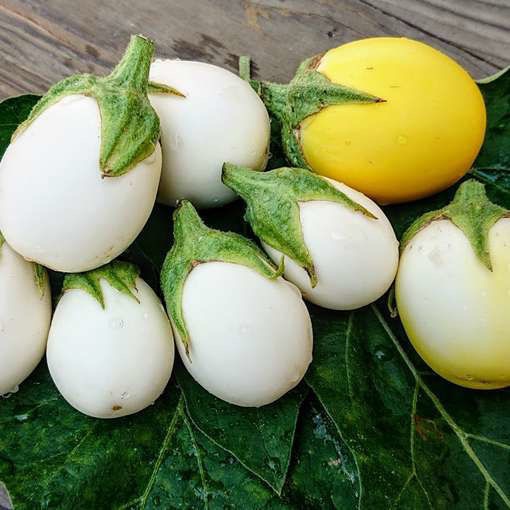
Apparently the type of eggplant-aubergine made a difference to your language. In the US, early exposure to the small white variety of aubergine led to the name “eggplant”.
As to how this innocuous and hard-to-cook vegetable gained popularity as an emoji… well, that’s the topic for another post altogether.

 Tales from Tobhamhor